Most coffee shops sell coffee. We set out to build something people couldn’t order through an app.

The Problem:

Coffee wasn't disappearing — community was.

Since their inception, cafés served as places where people gathered and formed communities. These “penny universities” were places where people gathered, ideas were exchanged, and connections were made.

Somewhere along the way, that changed. Coffee shops became faster, more efficient, and more transactional. People ordered ahead, picked up their drinks, and left. The pandemic only accelerated the trend.

People started working remotely, and conversations became scheduled. Meals became deliveries. More and more of life moved behind screens. Technology made everything more convenient, but it also made it easier to spend entire days without sharing physical space with another person.

Another coffee shop wasn't going to solve that. But perhaps a better one could remind people what they'd been missing. That belief became the foundation for Cafe Nido. It wasn’t necessarily about coffee, it was about connection.

The Belief:

Every brand begins with a point of view.

Ours was simple. Connect Through Coffee. Coffee was never the destination, but it was the invitation. We believed people weren't only looking for another latte. They were looking for somewhere to spend an hour that felt better than doom scrolling at home. Somewhere they could read, write, meet a friend. Somewhere they could work, think, or simply exist without feeling rushed to leave.

Everything we built — from the patio and the bookshelves, to the playlists, newsletters, service philosophy, community events, and visual identity —was designed to reinforce that single idea. If coffee brought people through the door, connection would be the reason they returned.

The Opportunity:

Most brands begin with a product. Cafe Nido began with a question. What makes someone want to stay?

Every decision that followed became an attempt to answer it. How does architecture encourage conversation? How does hospitality turn strangers into regulars? Could books become an invitation instead of a decoration? Could a newsletter feel like a letter from a friend instead of a marketing campaign? Could a coffee shop become the kind of place people missed when they weren't there?

Those questions became the foundation for every creative and operational decision that followed.

My Role:

Building Cafe Nido wasn't just a branding project. It was the work of building a business from the ground up.

As Founder and Creative Director, I was responsible for defining the vision and translating it into a consistent experience across every customer touchpoint. That included:

  • Brand strategy and positioning

  • Brand voice and messaging

  • Social media and editorial strategy

  • Email marketing and newsletters

  • Paid advertising

  • Video campaigns and photography direction

  • Customer experience design

  • Hospitality standards and service philosophy

  • Community programming, partnerships, and events

  • Team training and internal documentation

  • Marketing experiments and growth initiatives

Rather than treating these as separate disciplines, I approached them as parts of a single system.

Every interaction—whether someone encountered Cafe Nido through an Instagram post, a Google search, a neighborhood recommendation, or their first visit — should feel like it came from the same point of view.

A brand isn't built by saying the same thing repeatedly. It's built by making the same promise in different ways.

The Brand Idea

Every memorable brand stands for something larger than the product it sells. Patagonia isn't really about jackets. Airbnb isn't really about accommodations. Nike isn't really about shoes.

Likewise, Cafe Nido was never really about coffee. Coffee simply gave people a reason to walk through the door. The brand existed to create something much harder to manufacture : a sense of community.

That belief influenced every decision that followed. The architecture prioritized lingering over efficiency. The used bookstore rewarded curiosity. The music encouraged a slower pace. The newsletters reflected instead of promoted. The social media celebrated moments instead of products. The events gave strangers a reason to become friends.

Individually, each decision was small. Together, they created an experience people recognized, remembered, and returned to. The challenge wasn't simply to communicate this idea. It was to make people feel it. Everything that follows — from the physical space to the brand voice, hospitality standards, marketing campaigns, and community programming — was designed to answer a single question:

How do you build a place people don't just visit, but genuinely belong to?

Translating a Belief Into a Brand

A brand isn't just a logo, or a color palette, or a slogan. Those things help people recognize a brand, but they don't give people a reason to care. The work began by asking a much simpler question: If Cafe Nido believes in connection, what would that look like in practice?

The answer couldn't live only on the website. It had to appear everywhere. Every customer interaction became an opportunity to reinforce the same idea. Not through repetition. Through consistency.

Every Touchpoint Became Part of the Story

The strongest brands don't tell people what they believe. They demonstrate it

That meant treating every decision — creative or operational — as part of a single experience. The architecture encouraged people to linger instead of rushing out. The bookshelves rewarded curiosity instead of consumption. The music slowed the pace of the room. The menus emphasized craft over complexity. The newsletters read like letters from a friend rather than promotions. The social media highlighted moments, people, and rituals instead of products. The events created opportunities for strangers to become neighbors.

None of these decisions existed in isolation. Together, they created a recognizable point of view.

Building the Brand System

Instead of beginning with marketing campaigns, we built a framework that every future decision could be measured against.

Our Mission

Connect Through Coffee.

Not because coffee changes lives. Because it creates opportunities for people to spend time together. Coffee became the common language, the ritual that we all take part in. Connection became the goal.

Our Vision

To create places where people feel more connected — to their neighborhood, to one another, and to themselves.

Our Values

Hospitality Over Service

Serving coffee is transactional. Making someone feel welcome is memorable.

Curiosity Over Convenience

Books. Conversation. Art. Ideas. We wanted Cafe Nido to reward people for slowing down instead of moving faster.

Consistency Builds Trust

Every interaction contributes to a person's perception of a brand. Consistency is what creates trust over time.

Community Members, Not Customers

Transactions end when the receipt prints. Communities continue being built long after people leave. Our goal wasn't simply to increase visits. It was to create regulars who felt like they belonged.

Defining the Brand Voice

Once the foundation existed, we needed a voice that reflected it.

Not every coffee company speaks the same way. Some are technical, others are playful. Some lean heavily into expertise. We wanted Cafe Nido to feel different. We wanted to sound thoughtful without becoming pretentious. Knowledgeable without becoming exclusive. Warm without being lazy. Calm without becoming forgettable.

Every sentence needed to feel like it belonged in the same room as the physical space.

Voice Principles

Write like a host, not a marketer.

Invite people in. Don't sell to them.

Teach generously.

Specialty coffee can be intimidating. Our job wasn't to prove expertise. It was to make people feel comfortable enough to become curious.

Celebrate people.

Coffee is cultivated by farmers, roasted by craftspeople, shipped by business people, and prepared by baristas. It’s then shared between friends, co-workers, family, and more. Over all else, we focused on the people behind the product.

Choose honesty over hype.

We weren't interested in sounding louder than everyone else. We wanted to sound believable. Trust compounds. So does authenticity.

Protect the experience.

Every piece of communication should leave someone feeling the same way the café itself did: elcomed, curious, and grounded.

The Coffee Book

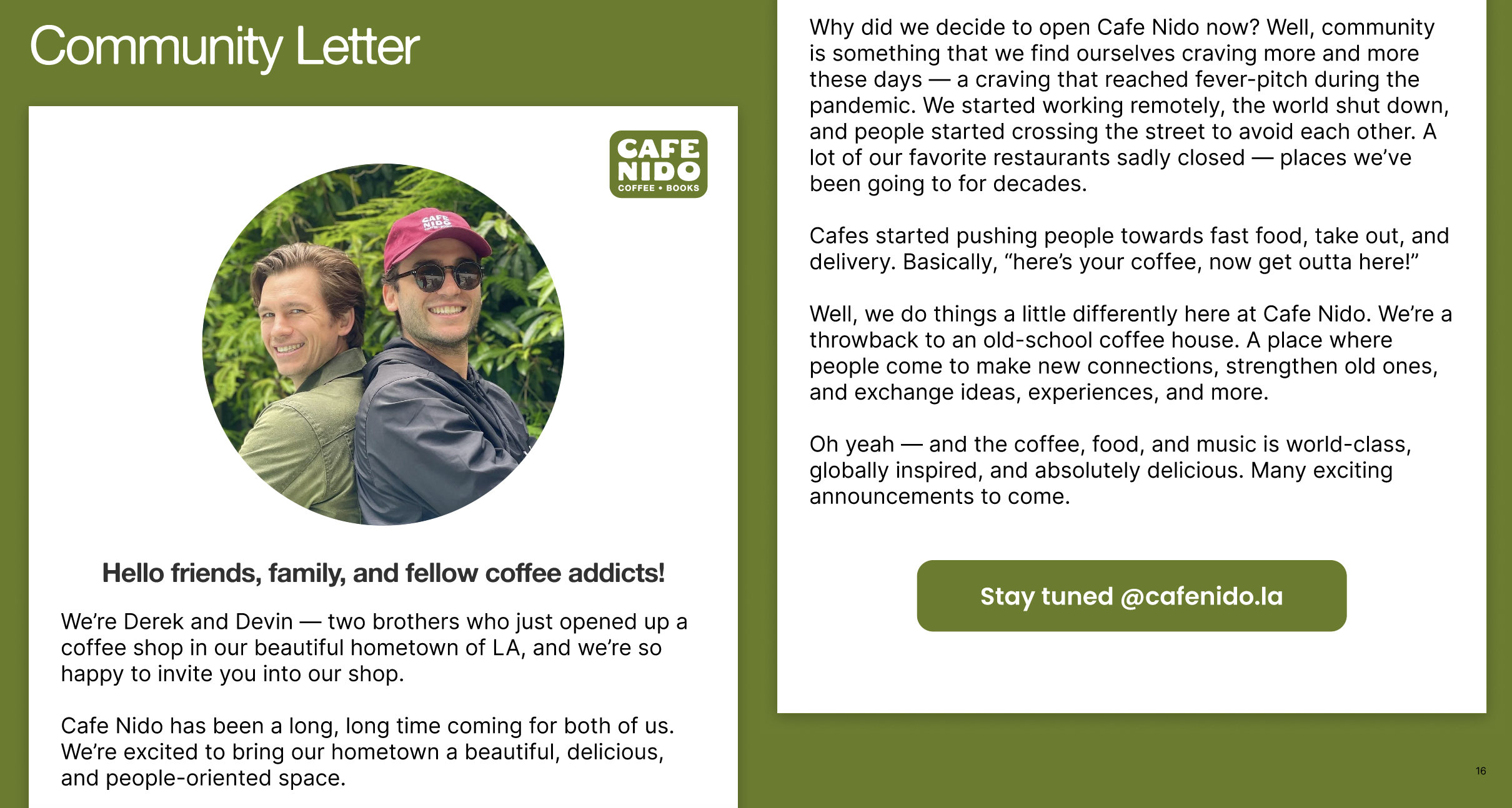
As Cafe Nido grew, consistency became more difficult. New employees joined. New ideas emerged. New opportunities appeared. Instead of relying on instinct, I created an internal brand guide that documented how the business should think, communicate, and operate.

It covered far more than visual identity. It defined our mission, our values, and our service philosophy. Everything from customer interactions., coffee education, hiring principles, training expectations, operational standards, and more. The purpose wasn't to create rules. It was to ensure the experience remained recognizable, no matter who was behind the counter.

A Brand Is a System

Most people interact with brands through marketing campaigns. I built Cafe Nido’s brand through day-to-day operations. Running Cafe Nido taught me that a brand isn't built in brainstorms or presentations. It's built in the thousands of decisions people make after the strategy is approved. It shines through how an employee greets a customer, or how long someone feels welcome to stay. Whether a mistake becomes an apology or an opportunity. Whether a newsletter feels like marketing or correspondence. Whether a first-time visitor decides to come back.

Strategy gives people direction. Systems make strategy repeatable. That became one of the most important lessons I took away from building Cafe Nido.

Designing the Experience

A brand isn't something people see. It's something they feel. Before someone reads your website, or sfollow your Instagram, or even tastes the coffee. People start forming their opinion subconsciously.

Brands aren't experienced all at once. They're experienced one detail at a time. The first step through the front door. The smell of espresso. The music. The light. The furniture. The greeting from the barista. The amount of time someone lingers after they've finished their drink.

Every one of those moments communicates something. The question wasn't how should Cafe Nido look? The question was how should Cafe Nido feel?

Designed for Staying

Most cafés are optimized for efficiency. We optimized for human connection.

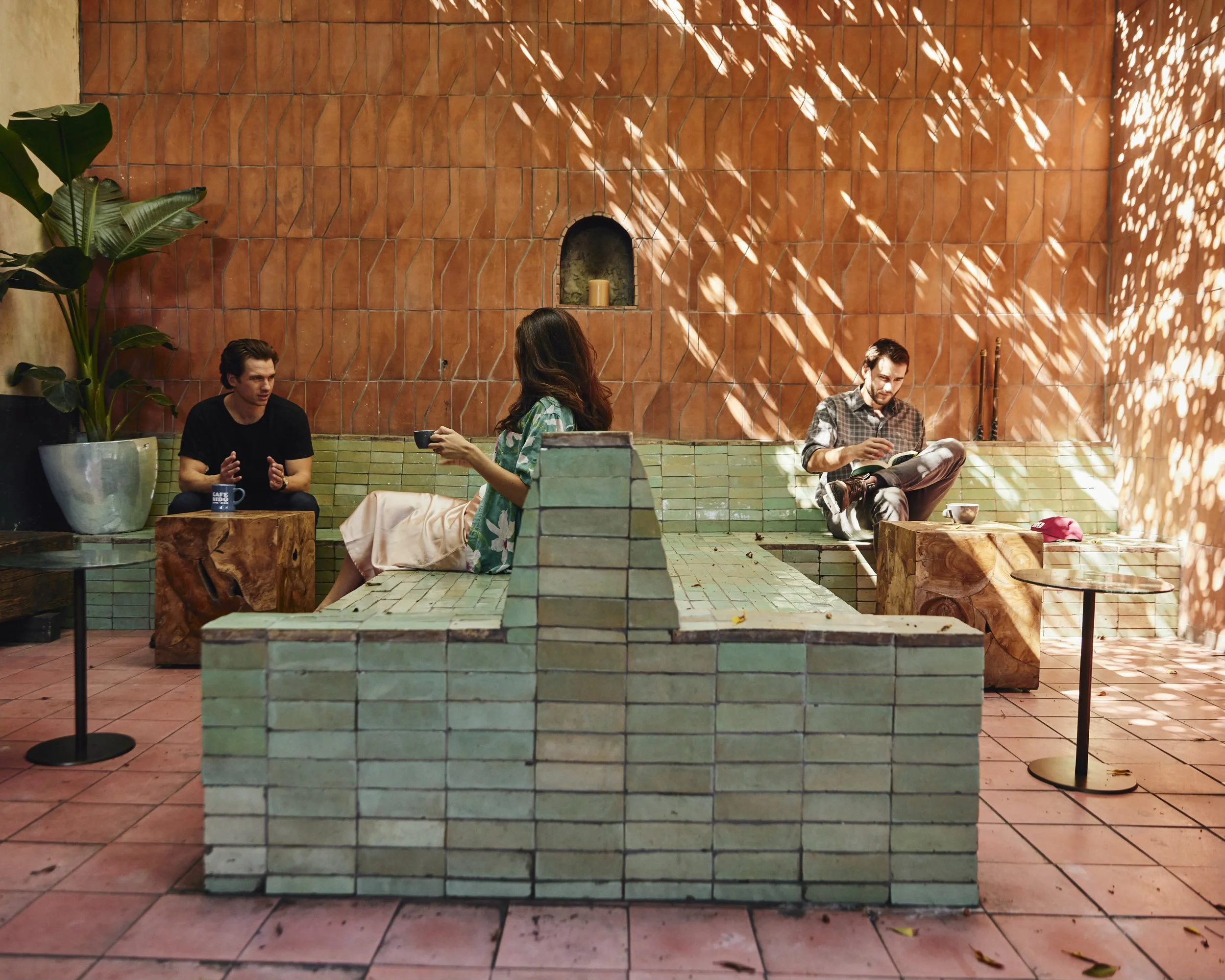
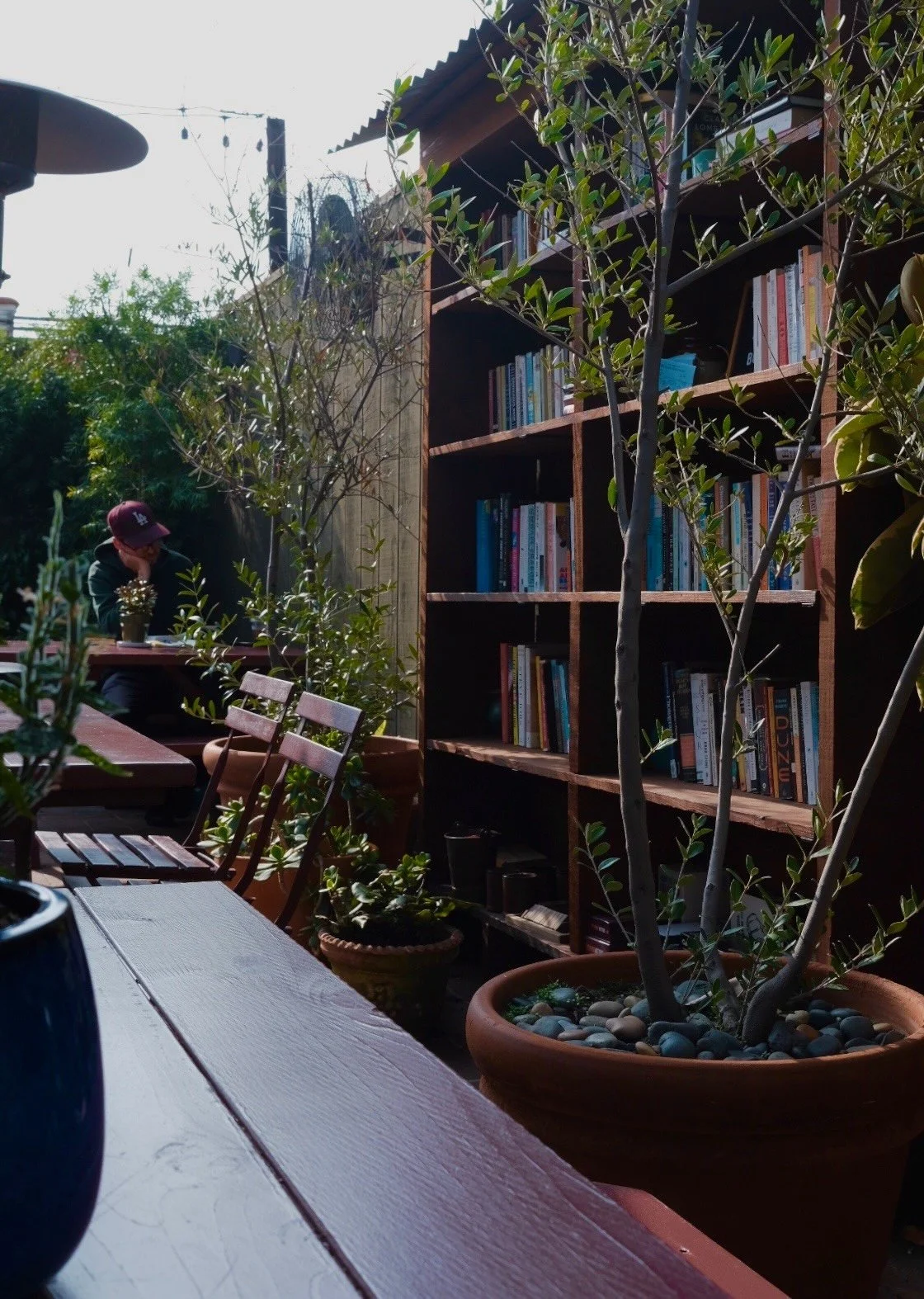
That meant making decisions that encouraged people to slow down rather than move faster. Natural light instead of harsh bright white Large communal seating instead of isolated tables. A shaded, private patio that invited people to linger. Plants that softened the environment, and a tree that brought it all together.

Wood, ceramics, books, and natural materials that made the space feel lived in instead of manufactured. Nothing existed purely for aesthetics. Every design choice supported the same emotional outcome. You can stay here.

The Patio

The patio quickly became the heart of Cafe Nido.

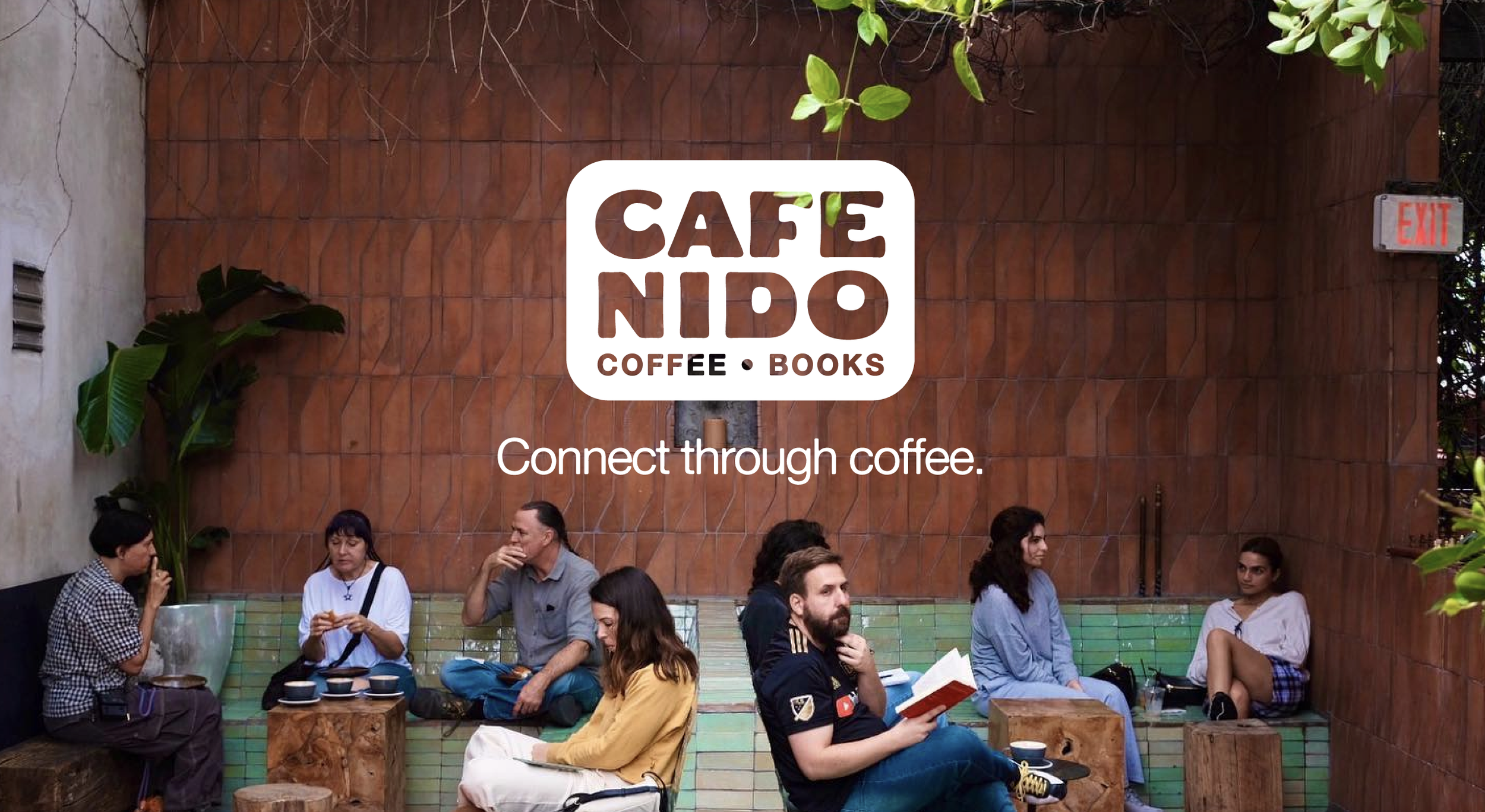
People stayed longer. Conversations lasted longer. Dogs became regulars. Neighbors recognized one another. Meetings turned into friendships. Parents brought their children. Writers filled notebooks. Readers finished chapters. The patio wasn't simply outdoor seating. It became the neighborhood's living room.

The Books

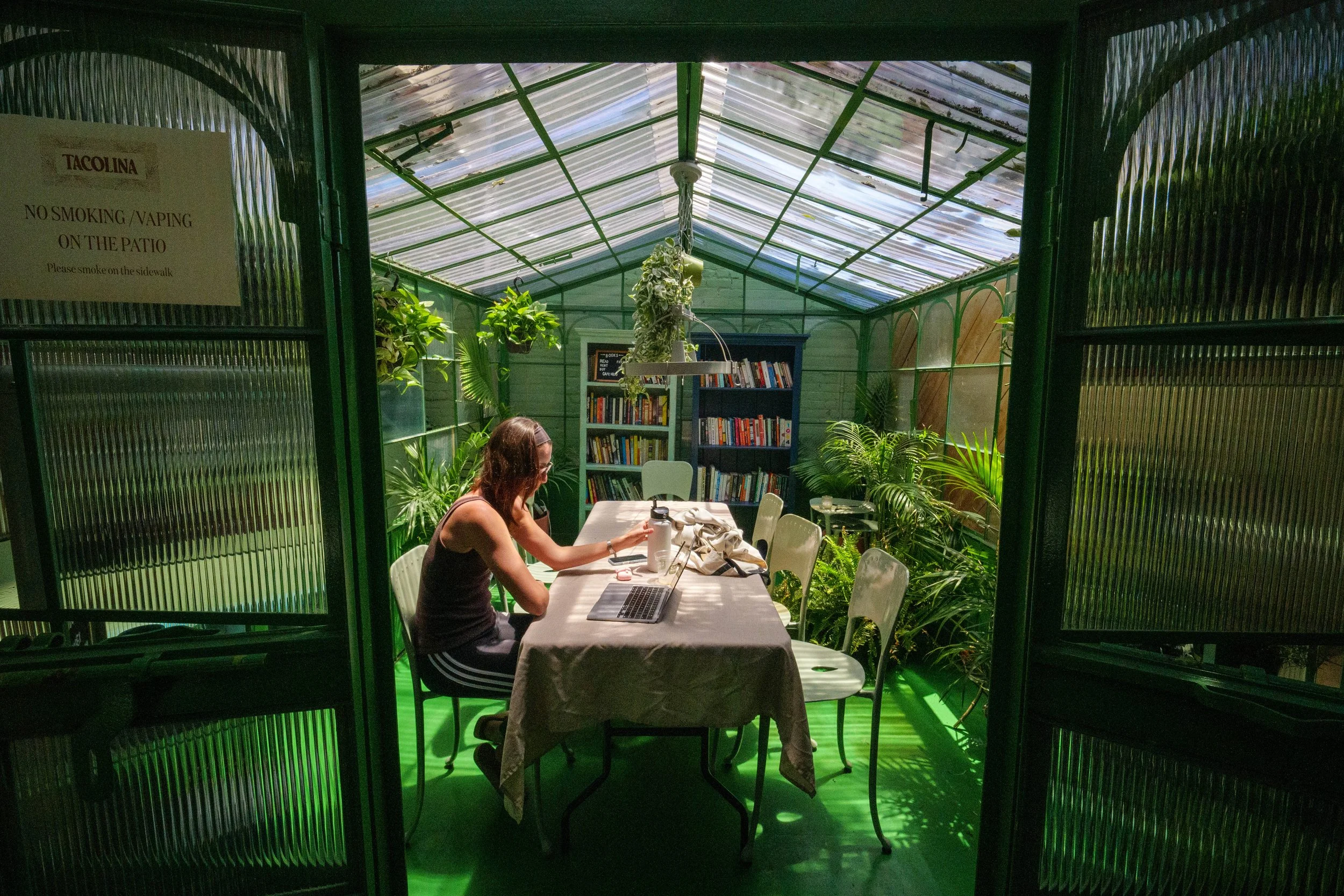
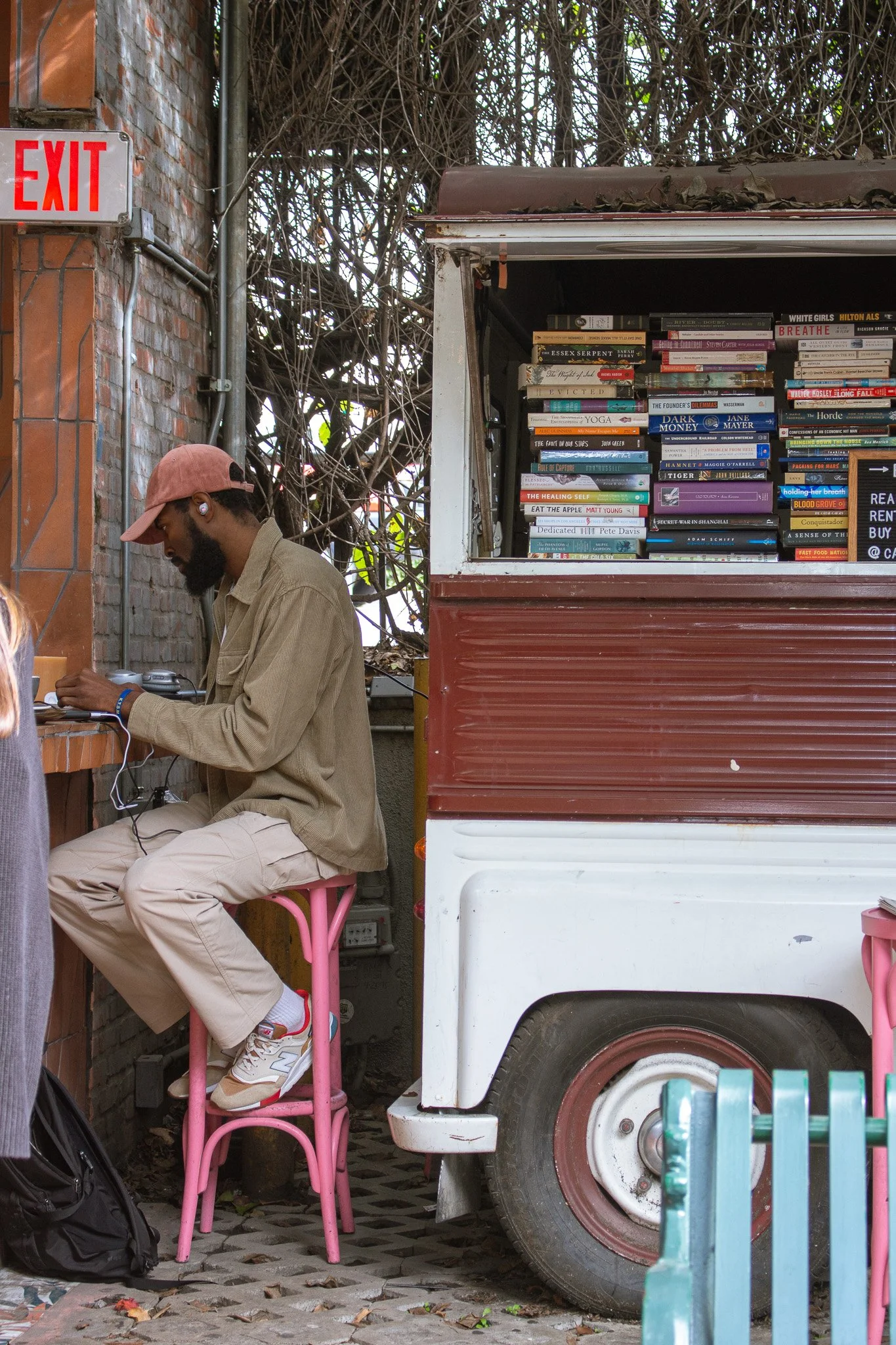
Books became one of the strongest expressions of the brand. Not only because we wanted to sell books, although we do. But books invite a different pace. A phone demands attention. A book rewards attention. That difference matters.

We created a used bookstore where customers could browse while waiting for their drinks, trade books they had already finished, discover something unexpected, or simply sit down and read. Books weren't merchandise. They were permission. Permission to slow down. Permission to stay. Permission to take some time for yourself.

Music as Hospitality

Music is often treated as background noise. We wanted to treat it as part of the customer experience. The playlist influenced the pace of the room. It created energy without becoming distracting. It helped define the emotional atmosphere long before someone tasted their drink. We usually started off with soul in the morning, transitioned into Brazilian Bossa Nova or latin-inspired jazz, and ended the day with a little more energy.

Like every other design decision, music reinforced the same message: You're welcome to stay awhile.

Hospitality

One of the biggest lessons I learned as a founder was that hospitality and service aren't the same thing. Service is transactional. Hospitality is emotional. Service answers the question: "What did the customer order?" Hospitality answers the question: "How did we make them feel?" That distinction influenced everything from hiring to training to the way employees greeted guests.

We weren't trying to impress people. We were trying to make them feel comfortable enough to come back. Again. And again. And again.

Designing Every Interaction

As the business grew, we documented these ideas in what eventually became the Cafe Nido Coffee Book. It wasn't simply an operations manual.

It became a philosophy for how the brand should behave. How to welcome people. How to talk about coffee. How to solve problems. How to train new employees. How to create consistency without losing personality.

A Place Worth Returning To

One of the questions I returned to most often was surprisingly simple. Would I spend my own Saturday morning here?

If the answer wasn't yes...Something needed to change. That question became a better design tool than any trend report or competitor analysis. Because ultimately, Cafe Nido wasn't designed to maximize transactions. It was designed to earn habits and become part of someone's weekly routine. The kind of place they recommend without being asked, or missed when they're away. The kind of place that becomes part of the story they tell about their neighborhood.

Reflection

Looking back, I don't think we were designing a coffee shop. We were designing reasons for people to stay a little longer. Sometimes that reason was a great cappuccino. Sometimes it was a conversation. Sometimes it was a book. Sometimes it was simply the feeling that there was nowhere else they needed to be.

That, more than anything else, became the product.

Finding a Voice Online

I wanted to build a brand that was recognized long before its logo appears.

Every brand speaks.

The question was never whether Cafe Nido should have a voice. The question was whether that voice would feel as intentional as the physical space itself. Whether someone read our newsletter, visited our Instagram, ordered from our website, or spoke with one of our baristas, it should feel like the same person was talking. Not because the words were identical. Because the point of view was.

Voice Before Vocabulary

One of the biggest mistakes brands make is confusing tone with voice. Tone changes. Voice doesn't. The tone of an anniversary post should be different from the tone of a menu or a customer email. But the perspective behind them should remain recognizable.

Before writing a single campaign, I defined a simple question.If Cafe Nido were a person, how would it make people feel after a conversation?The answer became our north star. Thoughtful. Warm. Curious. Grounded. Confident without being exclusive. Knowledgeable without becoming intimidating. Optimistic without sounding performative. Every sentence was measured against that standard.

Writing Like a Host

Most marketing tries to persuade. Hospitality tries to welcome. That distinction shaped almost everything we wrote. Instead of asking, "How do we convince someone to visit?" We asked, "How do we make them feel invited?"

That subtle shift changed everything. Announcements became conversations. Newsletters became letters. Instagram became a journal. Education became storytelling. Advertising became an invitation instead of a promotion.

Teaching Without Intimidating

Specialty coffee has a tendency to become technical. There are a lot of intimidating terms thrown around. Origin. Elevation. Processing methods. Extraction. Those details matter, but they're rarely why someone falls in love with coffee. People connect with stories, not specifications. Instead of trying to demonstrate expertise, we tried to create curiosity.

We tried to introduce customers to the people behind the coffee. The farms. The producers. The roasters. The process. Not to impress them. To help them appreciate the journey behind every cup. Knowledge should make people feel included. Not excluded.

Every Channel Told the Same Story

As Cafe Nido grew, communication expanded far beyond the café itself. The website introduced our philosophy. Newsletters documented our journey. Instagram captured everyday moments. Video campaigns expressed emotion. Paid advertising solved practical problems. Signage welcomed people into the space. Menus reinforced simplicity. The medium changed. The message didn't. Every channel became another opportunity to answer the same question: What kind of place is this?

Content as Experience

One realization changed how I approached marketing. Content shouldn't simply describe the customer experience. It should become part of it. A newsletter should feel like spending five quiet minutes at Cafe Nido. An Instagram post should create the same sense of calm as sitting beneath the trees on the patio. A video should communicate atmosphere before product. Even paid advertising should reinforce the brand instead of interrupting it.

Marketing wasn't something that happened outside the café. It became another room inside it.

Consistency Creates Trust

One campaign rarely changes how people perceive a company. Hundreds of consistent interactions do. The same values that shaped the physical space also shaped every piece of communication.

The result wasn't simply a recognizable visual identity. It was a recognizable personality.

Customers began recommending Cafe Nido not because of a single advertisement, but because every interaction felt consistent with the one before it. Trust wasn't built through repetition. It was built through alignment.

Selected Work

Creating a Sense of Place

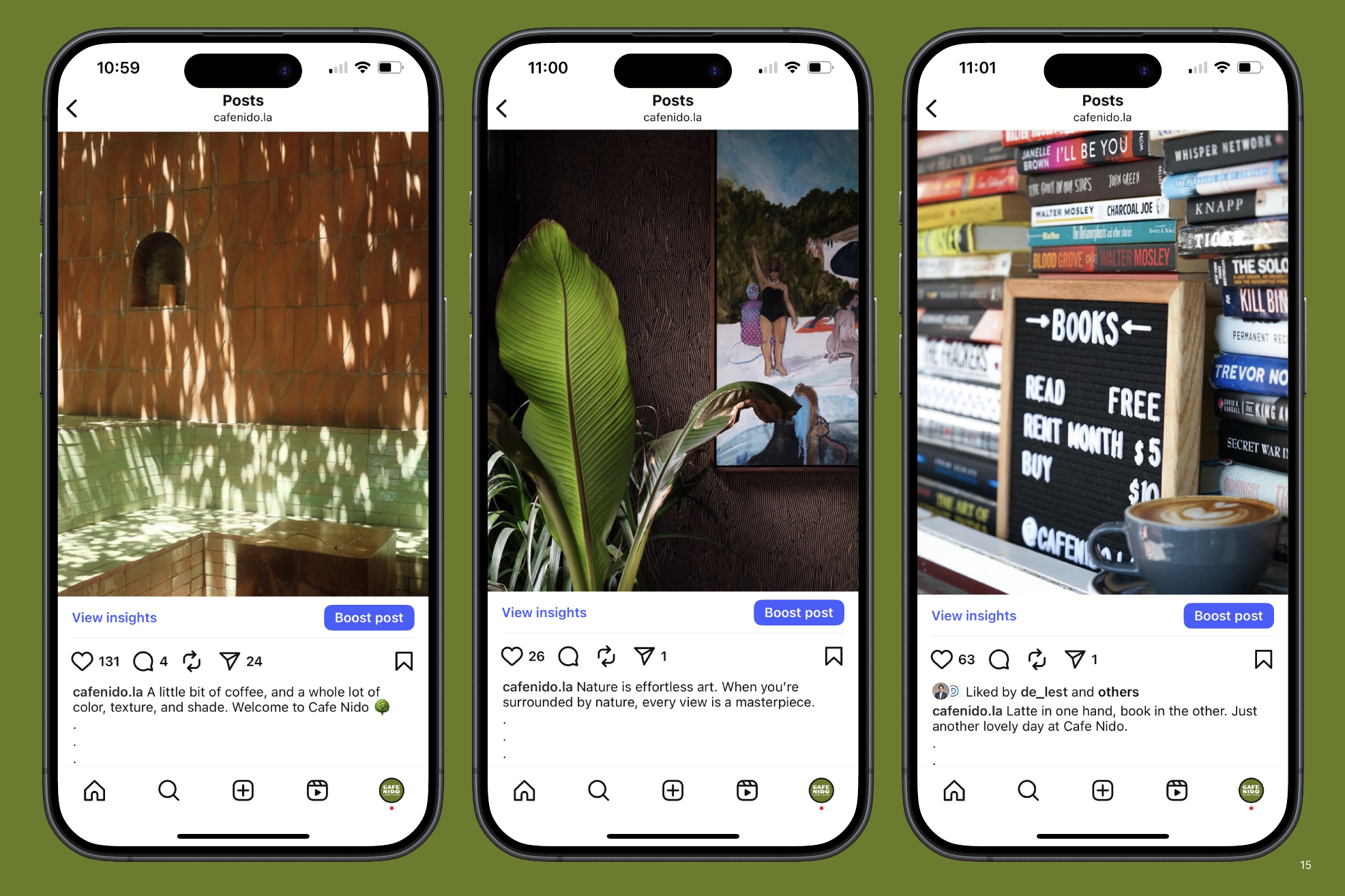
Rather than focusing on drinks, much of our content highlighted the environment itself — sunlight filtering through the patio, books on the shelves, conversations between friends, and the quiet rituals that defined everyday life at Cafe Nido.

The goal wasn't to sell coffee. It was to help people imagine themselves there.

Writing Like a Neighbor

Some of the most meaningful communication wasn't promotional at all.

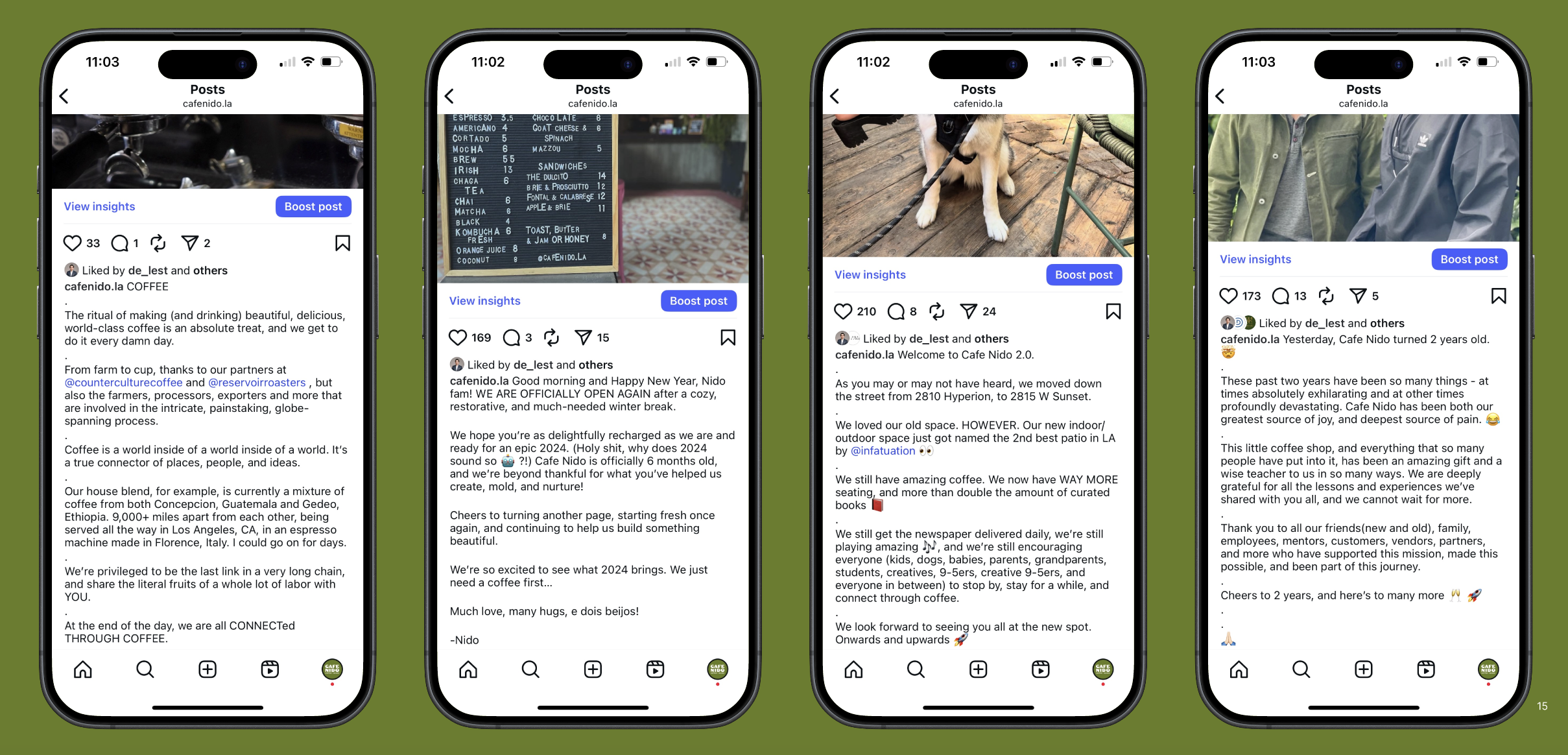
Whether celebrating milestones, announcing changes, or thanking our community, we wrote as though we were speaking to neighbors rather than customers. That decision created a relationship built on trust instead of transactions.

Selling the Feeling

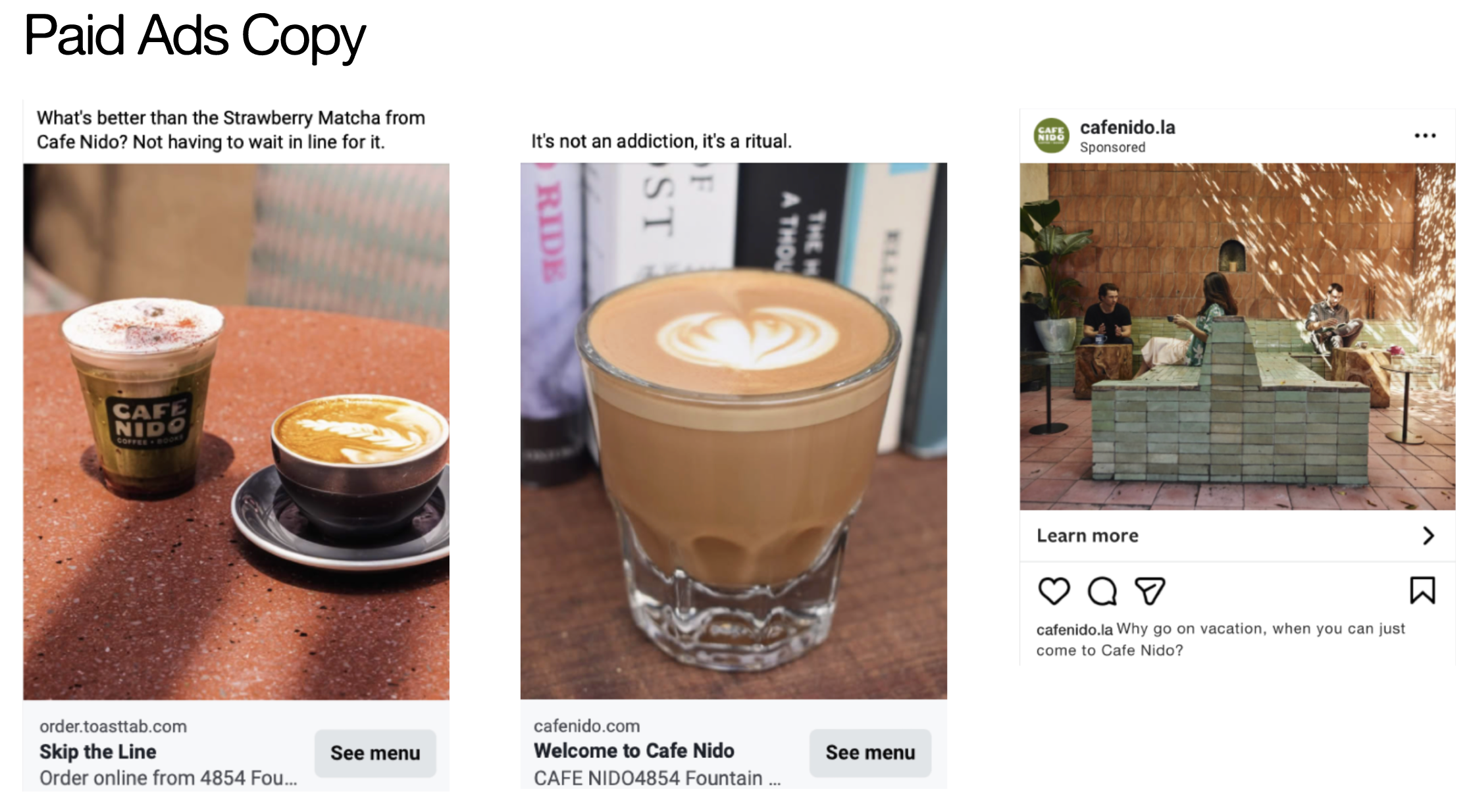
Our advertising rarely focused on product features. Instead, it highlighted convenience, ritual, and atmosphere. A better morning. A quieter afternoon. A place worth leaving the house for. The coffee supported the message. It was rarely the message itself.

Ideas Bigger Than Coffee

Some concepts weren't designed to sell drinks. They were designed to communicate values.

Ideas like Sunlight > Screen Time reflected a broader belief about how people spend their lives. Those campaigns expanded the conversation beyond coffee and positioned Cafe Nido as an advocate for slowing down, connecting with others, and spending more time in the physical world.

Reflection

Looking back, I don't think we were creating content. We were documenting a point of view. Every photograph. Every headline. Every newsletter. Every campaign. Every advertisement.

They all became different expressions of the same belief. If the architecture invited people to slow down, the writing should too. If the café felt calm, the communication should feel calm. If the space encouraged connection, the brand voice should do the same. Consistency wasn't a creative constraint. It became the creative strategy.

Building a Business, Not Just a Brand

A beautiful brand that doesn't work isn't a brand. It's decoration. One of the biggest lessons I learned from Cafe Nido was that creativity doesn't exist separately from business. Every creative decision has operational consequences. Every operational decision influences the customer experience. A menu affects speed. Pricing affects perception. Furniture affects how long people stay. Music affects the energy of a room. Staff training affects online reviews. Marketing affects staffing requirements. Nothing exists in isolation. Running Cafe Nido taught me that brand strategy and business strategy are often the same conversation.

Every Assumption Was Tested

Ideas are easy. Businesses are built through experimentation and cold, hard, execution. Rather than assuming we knew what customers wanted, we treated Cafe Nido like an ongoing series of experiments. Every test answered a simple question: Can we make the experience better while building a healthier business? Some experiments focused on marketing. Others focused on operations. Many focused on customer behavior. Every result informed the next decision.

Experiment: Driving Morning Traffic

(IMeta campaign.)

One challenge became obvious early. The café was significantly busier later in the morning than it was immediately after opening. Instead of increasing advertising across the board, we focused on a very specific behavior: Getting people to visit before 10:00 a.m. We launched targeted Meta campaigns promoting discounted cold brew during slower weekday mornings. Rather than measuring impressions or likes, success was defined by behavior. Did more people come in? Did slower hours become more productive? Did the campaign pay for itself? Treating advertising as an experiment rather than a campaign made every future decision easier.

Listening Before Guessing

(Customer survey)

One of the most valuable marketing tools wasn't advertising. It was asking questions. Customer surveys helped us understand how people discovered Cafe Nido, what kept them coming back, and what they valued most about the experience. The results often challenged our assumptions. Word of mouth consistently outperformed paid acquisition. The environment mattered as much as the coffee. People described the café using emotional language rather than product language. Those insights reinforced something we'd believed from the beginning: People weren't simply buying drinks. They were choosing how they wanted to spend part of their day.

Community as Growth

Growth didn't come from one viral campaign. It came from creating more reasons for people to return. Reading clubs. Workshops. Brand partnerships. Pop-ups. Neighborhood events. Private gatherings. Creative collaborations. Each one introduced new people to Cafe Nido while strengthening relationships with existing customers.

Instead of asking, "How do we acquire customers?" We increasingly asked, "How do we give people another reason to come back?" That subtle shift produced a healthier business than constantly chasing new audiences.

Creativity Through Constraints

Founding a business also meant learning to create within limitations. Budgets were limited. Time was limited. Resources were limited. That forced every creative decision to become more intentional. Ideas had to work. Marketing needed measurable outcomes. Partnerships needed mutual value. Operational systems needed to scale. Instead of seeing constraints as obstacles, they became useful design parameters. The question wasn't, "What's the most creative idea?" It became, "What's the most effective idea we can execute well?"

What Building a Business Taught Me About Creativity

Before Cafe Nido, I thought creativity happened during brainstorming sessions.

Running a business taught me something different. Creativity happens in problem solving. It's deciding how to reduce wait times without sacrificing hospitality. It's writing a menu that's easier to understand. It's restructuring a workflow to improve consistency. It's designing an event that strengthens community while generating revenue. It's recognizing that sometimes the best marketing decision isn't another campaign. It's improving the customer experience. The most valuable creative work isn't always visible. Often, it's operational.

Selected Outcomes

  • Built a recognizable neighborhood brand from the ground up.

  • Grew the business into a seven-figure annual operation.

  • Developed a comprehensive internal brand and operations guide.

  • Established recurring community programming.

  • Built partnerships with brands, creators, and local organizations.

  • Designed and tested paid acquisition campaigns.

  • Created a recognizable editorial voice across multiple channels.

  • Led hiring, training, and customer experience strategy.

  • Managed full business operations, including budgeting, staffing, vendor relationships, and marketing.

Reflection

People often ask what it was like to build Cafe Nido. They're usually asking about coffee. The truth is, I rarely think about coffee. I think about systems. Culture. Leadership. Storytelling. Customer psychology. Decision-making. What began as a neighborhood café became an education in building organizations.

It taught me that brands aren't built through isolated moments of inspiration. They're built through thousands of ordinary decisions made consistently over time. That's the lesson I'll carry into every company I help build next.

By the time I stepped back to look at Cafe Nido, I realized something unexpected. I hadn't simply opened a coffee shop. I'd built a complete brand ecosystem. One with a clear point of view. A recognizable voice. A documented operating philosophy. A loyal community. And a business capable of sustaining it. The experience fundamentally changed how I approach creative work. Not because it taught me how to build a café. Because it taught me how to build a brand.

Next
Next

Pear Deck